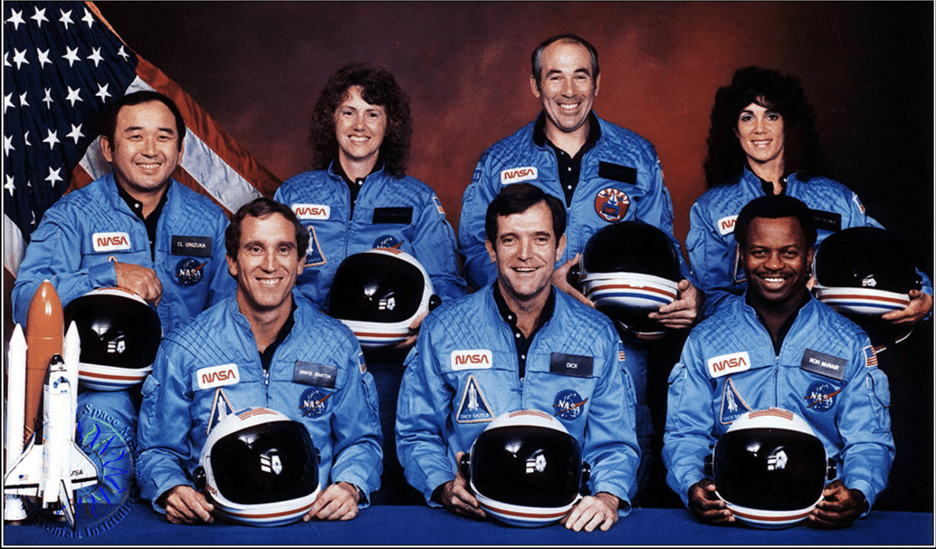
Forty years ago today I was sitting on a couch in Dwight Hall at Yale when someone came into the room and said that the Space Shuttle had exploded. I refused to believe it had actually been destroyed. Unusually for that time, we had a TV in the common room of our dorm room so I ran to my room to see what I could find out. I had been a big space buff as a kid – trying to stay up and watch the first men walk on the moon, going to Huntsville Space Flight Center to see the shuttle Enterprise during testing, in high school I was fortunate enough to see a Space Shuttle launch in person. But like many Americans I had stopped following the program. What I saw on the TV though made it clear that something catastrophic happened and the shuttle had no hope of surviving. “Obviously a major malfunction.” as the flight controller said.
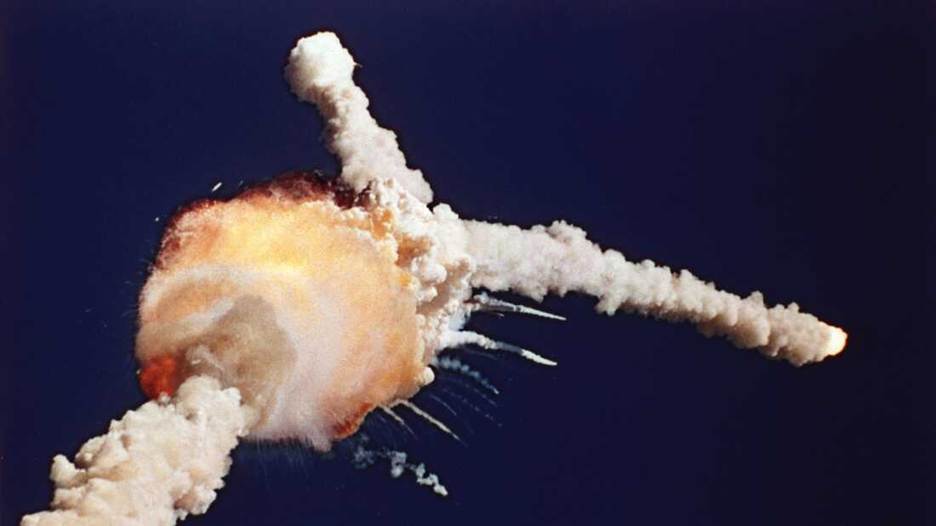
During the investigation we found out that this was a completely preventable tragedy. One of my favorite physicists, Richard Feynman, was key in pining the blame on the O-rings (included a demonstration (https://youtu.be/6Rwcbsn19c0?si=PC7vShNEKvokOGo9).
Perhaps the saddest thing about the Challenger tragedy is that not only did it cost the lives of the seven astronauts and take them away from their friends and family, but it also severely impacted the engineers that knew what was going to happen, tried to stop the launch but couldn’t. In some ways they never recovered either.
There are a number of great resources on the Challenger disaster for those of you who are too young to remember it or did not keep up with the aftermath.
Since this is the 40th anniversary, NPR has a nice review of their coverage and the engineers who tried to stop the launch – https://www.npr.org/2026/01/25/nx-s1-5647677/challenger-at-40
I really only learned about how wracked with guilt the engineers were ten years ago at the 30th anniversary because of NPR reporting on that anniversary.
First they had a story about Bob Ebeling still blamed himself for the destruction of the Shuttle – https://www.npr.org/sections/thetwo-way/2016/01/28/464744781/30-years-after-disaster-challenger-engineer-still-blames-himself
Then almost a month later, they followed up because so many people had written Ebeling following the first report –
Netflix has a documentary on the disaster called Challenger: The Final Flight.
Here are NPR obituaries on Rober Boisjoly and Allan McDonald, two of the other engineers involved –
And finally the BBC has a wonderful podcast called 13 Minutes dealing with space and their third season talks about the Space Shuttle up through the return to flight after the Challenger disaster – https://www.bbc.co.uk/programmes/p0lq7254.

 Some Random Thoughts